
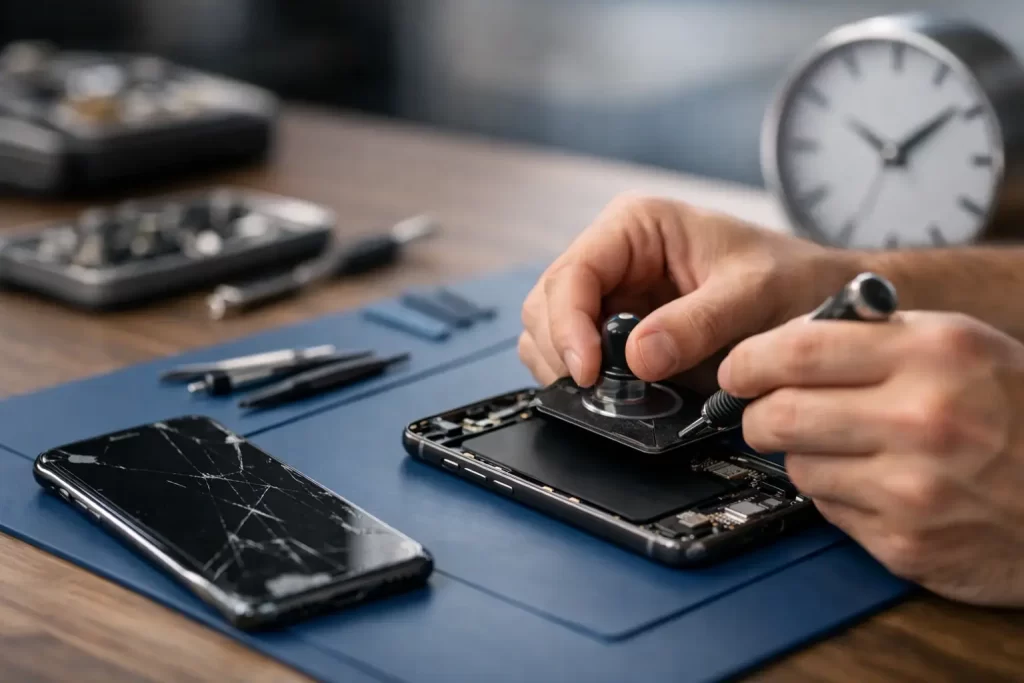
You usually notice the real cost of a cracked screen the second you try to use your phone one-handed on the move. Messages are harder to read, Face ID can become unreliable, and every extra tap on shattered glass feels like a gamble. If you are wondering about iphone screen replacement time, the short answer is that many standard repairs can be completed the same day, and often in under an hour, but the exact timing depends on what is actually damaged.
That last part matters more than most people expect. A screen that looks like a simple crack from the front can sometimes come with frame damage, touch issues, sensor faults or moisture exposure underneath. When that happens, the repair is still very doable, but the turnaround can shift from a quick screen swap to a more careful diagnostic and rebuild.
What affects iPhone screen replacement time?
The biggest factor is whether the damage is limited to the display assembly. If the OLED or LCD panel is cracked, the touch layer is failing, or the front glass is smashed, the fix is usually straightforward as long as the rest of the phone is intact. On many models, that means a fast turnaround with minimal downtime.
Things slow down when the impact has affected more than the screen. A bent frame can stop the new display from sitting correctly. Damage around the earpiece speaker or sensor assembly can affect Face ID and require extra care during the repair. If the phone has also taken in liquid, the technician may need to inspect the board and connectors before fitting a new screen, otherwise you risk replacing one problem with three more.
The model also plays a part. Newer iPhones have tighter internal layouts and, depending on the device, may need calibration steps after the physical replacement. Older devices can be quicker in some cases, but that depends on their condition. A phone that has already had poor-quality repairs, missing screws or pry damage may take longer than a newer model repaired properly for the first time.
Typical iphone screen replacement time by repair type
For a standard front screen replacement with no hidden complications, the timing is often under one hour. That is the best-case scenario and it is common enough that many customers plan the repair around a lunch break, a quick errand in the CBD or a gap between shifts.
If the frame is slightly bent, the job may need additional time to straighten and test. If the housing is too distorted, a technician may recommend a bigger repair path rather than forcing a new screen into a damaged body. That is the sort of trade-off worth hearing upfront. A fast repair is only useful if it lasts.
Where there is more serious impact damage, such as black display, ghost touch, no image, green lines or intermittent touch response, the screen may still be the main fault, but proper testing is essential before calling it done. A professional repair should include checks for brightness control, touch accuracy, proximity sensor function, ear speaker performance and charging response if the handset took a hard fall.
Then there are the jobs that look like screen repairs but are not only screen repairs. If your iPhone restarts in a loop after impact, has no backlight, shows lines after a previous cheap replacement, or has connector damage on the board, the repair time can extend because board-level work may be involved. That is where experience in micro-soldering and logic board repair makes a real difference.
Why some repairs are done in under an hour
Fast turnaround is not luck. It usually comes down to stock, experience and process. When the right screen is available, the model is familiar, and the phone has no hidden faults, a skilled technician can move quickly without cutting corners.
The key is that speed should come after diagnosis, not instead of it. A proper repair workflow includes checking the condition of the frame, opening the phone carefully, transferring any required components, fitting the new display, sealing the device correctly and testing all major functions. If a repairer promises speed but skips the testing, that can lead to a second failure a few days later.
For busy Darwin customers, that timing matters. If your phone is your work phone, your payment device, your map, your booking system or your connection to family, even half a day without it is frustrating. Quick service is not just convenient. It keeps your day moving.
When iPhone screen replacement takes longer than expected
There are a few common reasons a screen repair runs beyond the usual estimate. One is parts availability for less common models or colour variants. Another is hidden damage discovered during disassembly. A cracked display can mask a damaged bracket, torn flex cable, faulty front camera assembly or corrosion on the connectors.
Battery swelling can also complicate the job. If the battery has expanded, the screen may have lifted before the drop even happened, and replacing only the display is not always the right call. In that case, the repair may need to include a battery replacement to restore safe fitment and proper sealing.
Previous repair history is another major variable. Phones that have been opened with metal tools, fitted with low-grade parts or reassembled with missing screws often take longer to repair properly. The new technician has to correct the old mistakes before the current fault can be fixed with confidence.
If your phone has been exposed to water as well as impact, expect a more cautious process. A screen can be replaced quickly, but if liquid has reached the board, display connector or front sensor area, fitting a new part without inspection is risky. Sometimes the fastest option is to test first and prevent a repeat failure.
Should you wait or repair it straight away?
If the phone still works, people often put the repair off. That can be fine for a very minor crack, but delays come with trade-offs. Small fractures spread. Exposed glass edges can worsen with heat and pressure. Touch issues can become intermittent, which is often more disruptive than a fully dead screen because the phone feels usable until it suddenly is not.
There is also the risk of moisture and dust entering through the damaged display. Once contaminants reach the internals, a simple screen replacement can turn into a bigger job involving charge port cleaning, speaker issues or board diagnostics. Repairing it early is usually cheaper and faster than waiting for secondary faults to show up.
For customers who rely on their phone for work, study or travel, the better question is not whether you can tolerate the crack. It is whether you can afford the extra downtime if the screen fails completely at the wrong moment.
How to get the fastest turnaround
The quickest path starts with accurate information. When booking, give the iPhone model, describe what the screen is doing and mention anything else that happened at the same time, such as water exposure, frame bending, battery swelling or charging trouble. That helps the repairer prepare the right part and flag any likely complications.
It also helps to be clear about urgency. If you need the phone back the same day for work, say so. A good repair shop will tell you what is realistic rather than overpromising and leaving you waiting.
Before handing over the device, back it up if the screen still responds. Most screen replacements do not affect data, but a backup is always the smart move when your phone has suffered impact damage. If the handset has more serious faults, or if there is board-level damage, protecting your data becomes even more important.
At iSmashed, many common iPhone screen repairs are completed fast, often in under an hour, with a practical focus on getting customers back up and running without the usual wait. That matters when your device is not a luxury – it is how you work, pay, study and stay reachable.
What a good repair experience should look like
You should get a clear time estimate before the repair starts, not a vague promise. You should also be told if the phone shows signs of extra damage that may affect timing or cost. Straight answers matter, especially when you are deciding whether to wait in-store, organise a pickup time or use a come-to-you option.
A proper repair should also be warranty-backed. That gives you a clear path if something related to the fitted part fails after the job. It does not cover fresh accidental damage, but it does show the repairer stands behind their work.
Most importantly, the phone should be tested and returned with the main functions confirmed. A new screen is not much use if the touch response is patchy, the speaker is dead or the proximity sensor stops working on calls.
If you are asking how long an iPhone screen replacement takes, the honest answer is this: often less than an hour, sometimes longer, always dependent on the real condition of the phone. The fastest repair is the one done properly the first time, so you can get on with your day instead of coming back for the same problem twice.