
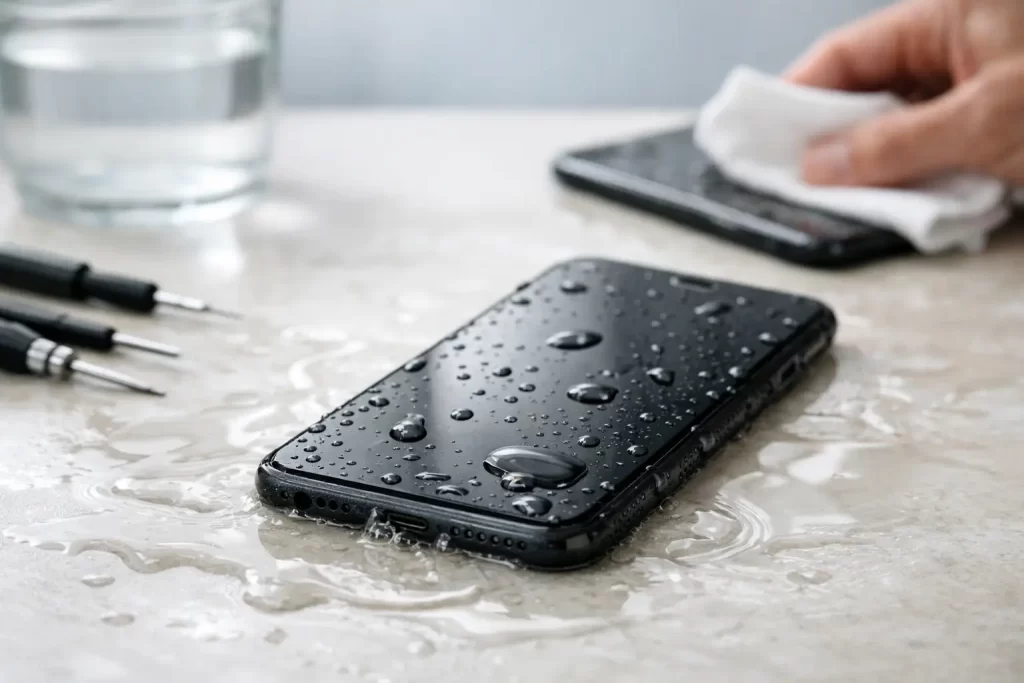
That sinking moment is usually the same. Your phone hits the sink, the pool, a wet benchtop or the bottom of a bag after a bottle leak – and the first question is immediate: can water damaged phones recover? The honest answer is yes, sometimes, but recovery depends on speed, the type of liquid, how long the phone stayed wet, and what happened after it came out.
A lot of phones do come back to life after water exposure. A lot also seem fine for a day or two, then develop charging faults, no display, distorted audio, camera failure or full board death later on. That delayed failure is what catches people out. Water damage is rarely just about getting the phone to switch back on. It is about stopping corrosion before it spreads.
Can water damaged phones recover after getting wet?
Sometimes they can recover fully. Sometimes they recover partially. Sometimes they power on but still need repair. And sometimes the damage is already on the logic board before you even dry the outside.
Modern phones are tightly packed devices. Once liquid gets past seals, it can reach battery connectors, display lines, charging circuits, cameras and board-level components very quickly. If the phone was submerged, exposed to salt water, sugary drinks or detergent, the risk jumps. Those liquids leave residue behind, and residue keeps causing trouble even after the visible moisture is gone.
This is why the simple idea of “leave it to dry and hope” is unreliable. Drying may remove some moisture. It does not remove minerals, corrosion or conductive contamination sitting across components.
What decides whether a water damaged phone can recover?
The biggest factor is time. The sooner the device is powered down and properly assessed, the better the odds. A phone that was retrieved quickly and kept off has a much better chance than one that stayed on, kept charging, or was tested over and over.
The second factor is the liquid itself. Clean fresh water is still bad, but it is less aggressive than sea water, soft drink, coffee, beer or soapy water. In Darwin, humidity can also work against you. Moisture trapped inside does not always evaporate cleanly, and corrosion can keep progressing in the background.
The third factor is where the liquid travelled. If water reached only the charging port or speaker area, repair may be relatively straightforward. If it reached the logic board and caused shorting on key power rails, the job can move into micro-soldering territory very quickly.
Then there is the question people usually ask last but should ask first – did you try to charge it? Plugging in a wet phone can turn a recoverable issue into a board repair. Electricity and liquid are a bad mix, especially around charge circuits and battery lines.
The first few steps matter more than most people think
If your phone gets wet, switch it off straight away if it is still on. Do not keep pressing buttons to check whether it works. Do not connect it to power. Do not put it on a wireless charger. Remove the case, SIM tray and any accessories, then dry the outside with a clean cloth.
After that, the best move is professional assessment. That matters because water damage treatment is not just surface drying. A proper repair process may involve opening the device, disconnecting the battery, inspecting for corrosion under shields, cleaning affected areas, testing current draw, and checking whether any lines or components have failed. If required, logic board repair and data recovery can follow.
People often lose time trying home fixes that sound clever but are not. Rice is the classic example. It does not reverse corrosion. It does not clean residue. It does not remove contamination under shields or chips. At best, it wastes precious hours. At worst, it gives false confidence while the damage spreads.
Signs your phone may still be recoverable
If the phone turns off immediately after getting wet and stays off, that is not always bad news. In some cases, shutting down quickly can limit secondary damage. Likewise, if the screen is black but the device still shows signs of life during proper testing, the issue may be isolated to the display, backlight line or connectors rather than total board failure.
Charging port problems after water exposure are also common and not automatically fatal. Corrosion in the port or on related circuitry can stop charging while the rest of the device remains salvageable. Speakers sounding muffled, cameras fogging internally, or Face ID and front sensors failing can all happen after liquid ingress without meaning the entire handset is beyond repair.
What matters is diagnosis. Guesswork wastes recoverable devices.
Signs recovery is less likely
If the phone was in salt water, a washing machine, a hot spa or a sugary drink for more than a brief moment, the chances drop. If it was repeatedly charged afterwards, the risk of shorted circuits rises. And if the board has already developed heavy corrosion, burnt pads or missing lines, repair becomes more complex and results less predictable.
Another red flag is intermittent behaviour. A phone that boots, crashes, loses touch, reboots in a loop or heats up unexpectedly may have unstable board-level damage. That does not mean impossible. It means the repair path is less about quick drying and more about skilled diagnostics, component replacement and sometimes data-first work.
Why some water damaged phones recover, then fail later
This is one of the most frustrating patterns. The phone seems okay after a night of drying, then a week later the battery drains fast, calls stop working, the screen flickers, or it stops charging altogether.
That happens because corrosion is chemical, not just physical. Once liquid residue remains on the board, connectors or flex lines, it can keep eating away at metal contacts over time. Humidity, heat and current flow can accelerate that process. So when people ask whether water damaged phones can recover, the better question is whether they can recover reliably. Without proper cleaning and testing, reliability is the part that often gets missed.
Repair versus replacement depends on the phone and the goal
Not every water damaged phone should be repaired. If the handset is older, heavily corroded and worth less than the repair cost, replacement may make more sense. If the phone is newer, stores critical data, or has only localised damage, repair is often the better value outcome.
This is where a practical assessment matters. Sometimes the goal is full restoration. Sometimes it is data recovery first, especially if photos, work files, notes or business apps matter more than the handset itself. In other cases, replacing the screen, battery, charging port or a few board-level components can return the phone to normal use without needing a full device replacement.
At iSmashed, this is exactly where advanced diagnostics, water damage treatment and micro-soldering make the difference. Not every shop goes beyond basic part swaps. Water damage often needs board-level capability.
What a proper water damage repair usually involves
A serious repair starts with internal inspection, not wishful thinking. The technician checks for visible corrosion, liquid markers, connector damage and current behaviour on the board. The battery is isolated, affected areas are cleaned properly, and the device is tested in stages.
If the phone still does not boot, the next step may be board diagnostics. That can involve tracing shorted lines, replacing failed filters, coils, ICs or connectors, and checking whether the display, charging system, cameras or audio circuits have been affected. In difficult cases, the priority may shift to data recovery before attempting broader restoration.
This is also why turnaround can vary. Some water damaged phones are straightforward and recover quickly. Others need careful logic board repair and more time on the bench. Fast service matters, but so does doing the right repair rather than the fastest guess.
The best thing to do right now if your phone got wet
Do less, sooner. Turn it off. Keep it off. Do not charge it. Do not trust rice. Do not keep testing it every hour. Get it assessed while the repair path is still open.
If you are in Darwin and need a quick answer, a professional inspection can tell you whether the device is likely recoverable, whether repair is cost-effective, and whether your data is still safe to pursue. That clarity matters when your phone is your wallet, your work tool, your camera and your day-to-day lifeline.
Water damage is one of those faults where hesitation costs more than action. Some phones recover completely. Some need parts, board work or data recovery. Some are too far gone. The faster you find out which one you have, the better your chances of getting back up and running without unnecessary downtime.