
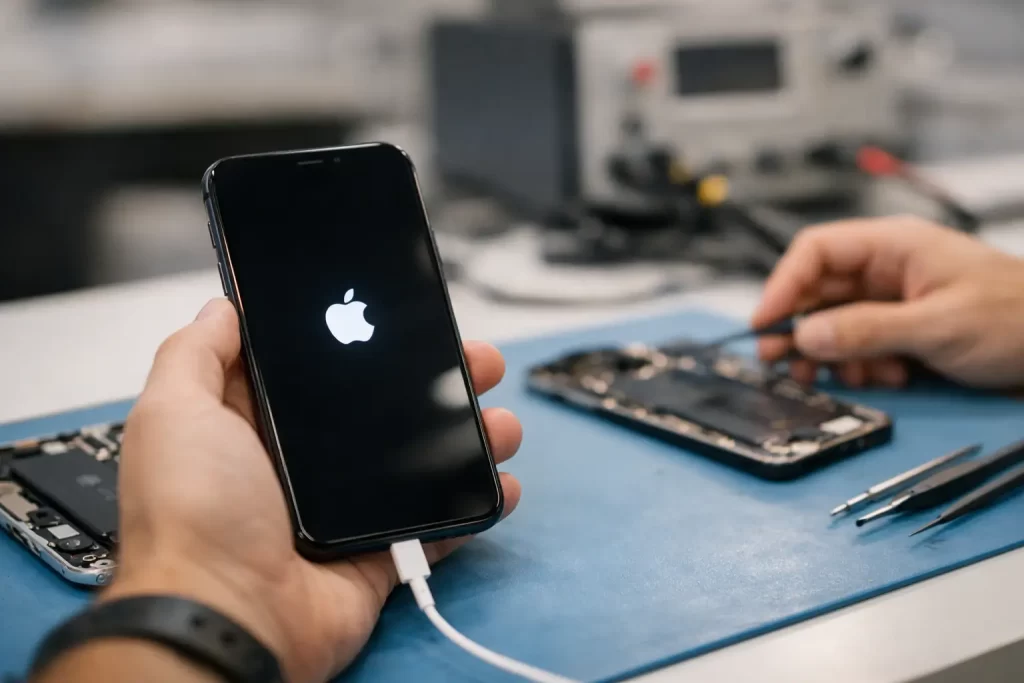
Your iPhone shows the Apple logo, shuts off, restarts, and repeats. No home screen. No calls. No access to photos, notes, banking apps, or work messages. When that happens, an iPhone boot loop repair service is not just about getting the phone to switch on again. It is about finding the actual fault quickly and fixing it without wasting your time.
A boot loop can look simple from the outside, but the cause is not always simple. Sometimes it starts after a failed update or low storage issue. Sometimes it points to battery instability, charge circuit faults, water damage, bad replacement parts, or a deeper logic board problem. That is why proper diagnosis matters. Guesswork costs more in the long run.
What an iPhone boot loop repair service should actually include
A proper repair service does more than plug the phone in and try a software reset. If the device keeps restarting, the first job is to work out whether the fault is software, power-related, part-related, or on the board itself. Those are very different repair paths, and they need different tools and experience.
For some devices, the issue is tied to a corrupted iOS update, failed restore, or storage fault. In those cases, a software-based repair may be enough. For others, the phone may be crashing during startup because a component is failing under load. That can mean the battery is unstable, the charging system is compromised, or the logic board has damage that only shows up when the phone tries to initialise.
This is where many generic repair counters fall short. They can swap screens and batteries, but boot loop faults often need board-level diagnostics, current draw testing, and micro-soldering. If the phone has already been repaired elsewhere, the job can be even more complex. Poor-quality parts, pry damage, missing screws, and connector damage regularly show up in devices that are stuck in restart cycles.
Why iPhones get stuck in a boot loop
There is no single reason an iPhone enters a restart loop. A software crash is one possibility, but it is far from the only one. Phones with nearly full storage can fail during updates and become unstable on startup. Water-damaged devices may work for a while, then develop corrosion that affects power lines or data communication between components. A weakened battery can cause voltage drops that trigger repeated restarts.
On some models, a failed peripheral can stop the boot process entirely. A damaged front sensor assembly, charge port, ear speaker flex, or other connected component may cause the device to panic and restart before it reaches the lock screen. In other cases, the issue sits on the logic board. That may involve damaged solder joints, shorted components, or failure in an IC that controls power, charging, or communication.
The key point is simple. Boot loops are symptoms, not diagnoses. The repeated restart is what you see. The real problem is what needs to be tested.
Software fault or hardware fault?
This is the first split in any sensible diagnosis. If the phone entered a boot loop straight after an update, restore attempt, storage warning, or app crash, software is high on the list. If it happened after a drop, water exposure, battery swelling, overheating, or charging issue, hardware becomes much more likely.
There is overlap, though. A software restore can fail because the underlying hardware is unstable. A phone may appear to have a firmware issue when the real cause is a battery or board fault. That is why quick but accurate testing matters more than assumptions.
Signs you need more than a basic reset
A forced restart is worth trying once. Beyond that, repeated DIY attempts can waste time or make data recovery harder. If the device only shows the Apple logo, keeps rebooting during charging, gets hot, fails to update through recovery mode, or cannot complete a restore, the issue usually needs proper inspection.
The same applies if the phone has a repair history. A non-genuine or failing part can interfere with startup. A charge port with corrosion can destabilise power delivery. Board damage from a previous shop can create intermittent faults that look random but are not random at all.
If the data matters, caution matters too. Restoring an iPhone may erase content. That is not ideal if the priority is recovering photos, notes, business contacts, or work apps. In some boot loop cases, the best path is to diagnose the hardware first and avoid unnecessary software procedures until the risk to data is clear.
How the repair process usually works
A good iPhone boot loop repair service starts with fault assessment, not promises that every phone is a same-fix scenario. Some jobs are straightforward. Others need staged testing.
The first stage is symptom review. When did the fault start? Was the device dropped, exposed to liquid, repaired recently, or updated before the problem appeared? That history helps narrow the path quickly.
The next stage is active testing. This can include checking power behaviour, charging response, recovery mode behaviour, restore errors, connected component faults, and current draw patterns. If a known bad part is causing startup failure, replacing that part may solve the issue. If the board is failing, the phone may need micro-soldering and logic board repair.
Where data is a priority, the repair strategy may change. Sometimes the aim is full restoration. Sometimes the first goal is temporary stabilisation so the device can boot long enough for data recovery. These are not always the same job, and pretending otherwise does customers no favours.
When micro-soldering is needed
This is the part many customers do not hear about until they have already been told their phone is beyond repair. In reality, some boot loop faults come down to board-level damage that can be repaired with the right equipment and skill.
Micro-soldering is used when tiny components on the logic board need replacement or rework. That may involve damaged lines, failed ICs, lifted pads, corrosion cleanup, or faults caused by impact and flexing. It is specialist work, but it is often the difference between replacing a phone and repairing it properly.
For Darwin customers who need fast answers, this matters. Sending a phone away for vague assessment can turn one urgent problem into a week-long hassle. A shop with in-house capability for advanced diagnostics and board repair can usually move much faster and with more clarity.
What to expect on turnaround and cost
There is no honest flat answer for every boot loop case. A software issue may be resolved far faster than a board-level repair. A battery or port issue may be more affordable than a damaged logic board. The right expectation is this: diagnosis first, then a clear quote based on the actual fault.
That approach protects you from paying for parts you do not need. It also avoids the common cycle of replacing one component after another without fixing the real issue. Fast service is valuable, but fast and wrong is still wrong.
For many customers, downtime is the biggest cost. Busy professionals, students, shift workers, and small businesses often rely on one phone for everything. Calls, email, maps, two-factor authentication, bookings, and payments can all grind to a halt when an iPhone is stuck rebooting. Speed matters, but proper diagnosis matters more.
Choosing the right repair shop in Darwin
If you are comparing repair options, ask direct questions. Does the shop handle logic board repair and micro-soldering, or do they only offer basic part swaps? Can they assess data recovery risk before restoring the device? Do they explain whether the fault is software, hardware, or board-related? Is the repair backed by a warranty?
Those details matter because boot loop jobs are rarely standard screen-replacement work. You want a service that can deal with the obvious causes and the less obvious ones. That means practical diagnostics, honest communication, and the ability to carry the repair past the easy stage if needed.
At iSmashed, that is exactly where advanced repair capability makes a difference. Everyday repairs are part of the job, but so are boot loops, charge faults, water damage, and motherboard-level issues that need more than a quick parts swap. The goal is simple: get the device working again as fast as possible, keep the process clear, and back the repair with a 3-month parts warranty.
iPhone boot loop repair service for urgent cases
Some boot loop faults can wait a day. Others cannot. If the phone holds business data, travel details, school access, photos, or critical accounts, delay adds stress quickly. The best next step is not trying the same restart process ten more times. It is getting the phone tested properly by a repairer who deals with these faults regularly.
A boot loop does not always mean the phone is finished. It means something is failing during startup, and that fault needs to be identified. Sometimes the fix is simple. Sometimes it takes board-level work. Either way, the sooner the cause is narrowed down, the sooner you know whether the path is repair, recovery, or replacement.
If your iPhone keeps flashing the Apple logo and starting over, treat it like what it is – a fault that needs proper diagnosis, not guesswork. A clear answer is usually the fastest way back to normal.