
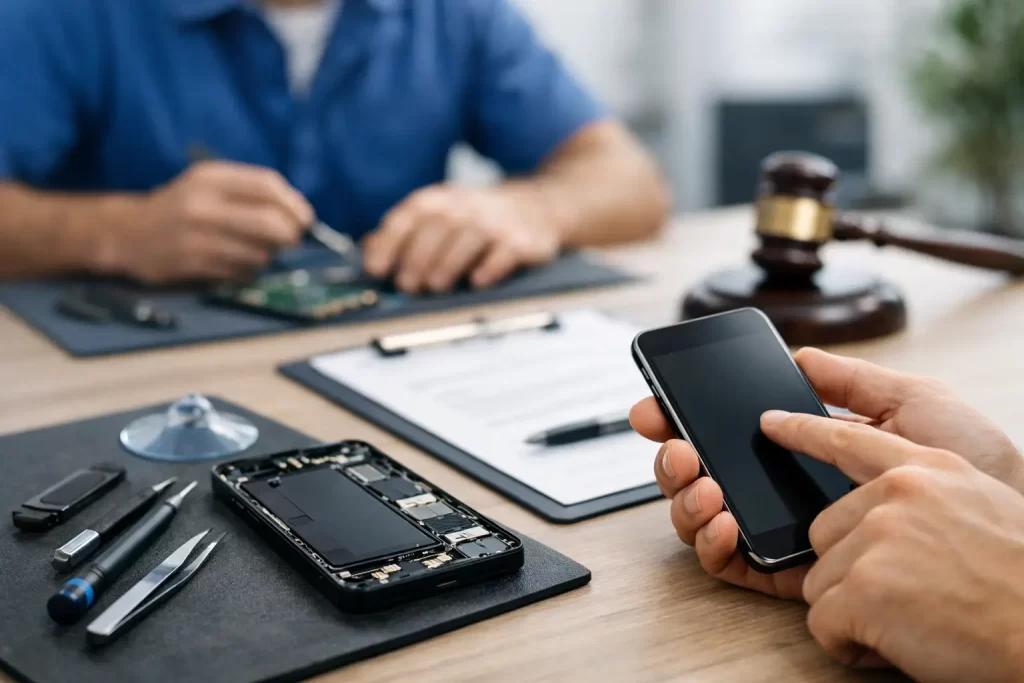
A cracked screen is stressful enough. The last thing you want is confusion about phone repair warranty terms after you have already paid to get your device working again. If your phone is your wallet, camera, work tool and contact list in one, the warranty matters almost as much as the repair itself.
A good repair warranty should be clear, practical and easy to explain in plain English. If it sounds vague, full of exclusions, or hard to pin down before the job starts, that is usually a warning sign. Fast repairs are valuable, but so is knowing exactly where you stand if a replaced part develops a fault.
What phone repair warranty terms actually mean
In simple terms, phone repair warranty terms set out what the repairer will stand behind after the job is done. That usually means the replacement part they fitted and the workmanship involved in fitting it. It does not mean your entire phone is now covered against every future problem.
That distinction matters. If you had a battery replaced, the warranty usually applies to that battery and the labour related to the battery repair. It would not normally cover a separate issue that shows up later, such as face ID failing, water damage, or a charging port packed with corrosion from an earlier spill.
Clear terms protect both sides. You know what support to expect, and the repair shop can be direct about what is and is not connected to the original job. That keeps things fair and avoids the all-too-common argument where a customer assumes every later issue should be fixed for free.
What is usually covered under phone repair warranty terms
Most reputable repairers cover two things: defective parts and faulty workmanship. If a screen starts lifting because the adhesive failed, or a newly fitted battery stops holding charge due to a part defect, that is the kind of issue a warranty is there for.
Workmanship cover is just as important as the part itself. A repair is not only about the component – it is also about how it was installed, tested and sealed. On more advanced work such as charge port replacement, board repair or micro-soldering, the quality of the labour can be the difference between a phone that lasts and one that comes back with the same fault.
A clear 3-month parts warranty is a strong example because it gives you a defined time frame without overcomplicating the promise. It tells you the repairer is prepared to stand behind the fitted part, while keeping the scope realistic.
Parts warranty versus full device warranty
This is where many customers get caught out. A parts warranty is not the same as a manufacturer-style warranty covering the whole handset. If your phone is older, has prior damage, or has already had third-party work done, a repair shop can only reasonably guarantee the component they replaced and the work attached to that repair.
That is especially true with devices that have suffered impact or liquid exposure. A phone might come in for a screen replacement, but the internal frame could already be bent, the battery swollen, or the motherboard showing early signs of corrosion. A shop can fix the immediate issue, but they cannot honestly promise the rest of the device will behave like new.
What is often not covered
The best warranty terms are not the ones that promise everything. They are the ones that clearly explain the limits.
Accidental damage after collection is commonly excluded. If the phone is dropped again, crushed in a bag, exposed to water, or damaged by a charger fault, that is a new event rather than a warranty issue. The same goes for cracked replacement screens caused by a fresh impact.
Liquid damage is another major exception. Even if a phone seems to recover after treatment, water and corrosion can create delayed failures. A speaker might work today and fail next week. A face sensor may become unstable. A board-level fault can spread. That is why warranty terms around water-damaged phones are often more limited and more conditional.
Pre-existing faults may also sit outside the cover. For example, if a phone arrives with a smashed display, housing damage and intermittent charging, replacing the screen does not automatically place the charging fault under warranty. Good repairers will flag those risks before starting.
Why physical condition matters
Modern phones are tightly packed. Bent frames, aftermarket housings, missing screws and prior pry damage all affect how well a device goes back together. Even a high-quality part can struggle if the phone itself has structural damage.
That does not mean the repair should not be done. It means the outcome depends on the condition of the device. A straight answer here is better than a sales pitch. If the frame is warped, you should be told that the new screen may sit differently or be more vulnerable to lifting later on.
Questions worth asking before you book
You should not need a law degree to understand a repair warranty. Before approving any job, ask what part is being replaced, how long the warranty lasts, what events void it, and whether the quote changes if further faults are found during testing.
It also helps to ask whether the shop has experience with your exact issue. There is a difference between a standard battery swap and a fault involving boot loop behaviour, no touch, audio IC failure or charge port damage on the board. The more technical the fault, the more important it is that the warranty terms match the repair type.
If the answer is clear and direct, that is a good sign. If you get vague wording like “covered unless it’s not” or broad promises with no time frame, keep looking.
Why turnaround time should not come at the expense of warranty
Same-day service is a major advantage when your phone is essential for work, travel or family life. But speed only matters if the repair is done properly and backed by a sensible warranty.
A rushed repair with poor-quality parts can create more downtime than waiting an extra hour for the job to be completed and tested correctly. This is where experienced repairers stand out. They can move quickly because they have the tools, stock and board-level knowledge to diagnose faults properly, not because they are cutting corners.
For Darwin customers especially, convenience is part of the value. If you are balancing work shifts, school pick-up or business calls, you need a repair service that gets the job done fast and explains the warranty in plain terms. That combination matters more than a flashy promise.
When warranty terms matter most
Some repairs are straightforward. Others carry more uncertainty, and that is where warranty terms become critical.
Battery replacements are a good example because performance issues can be caused by more than the battery itself. If the device has a charging circuit fault, damaged dock flex, bad cable habits or board corrosion, a new battery may not solve every symptom. A proper repairer will explain that before the job begins.
Screen repairs can be similar. A black display might be a failed OLED, but it might also involve board damage, touch circuit faults or housing distortion after impact. Board-level jobs such as backlight repair, no power faults and data recovery are even more dependent on diagnostics, because the problem can sit deeper than the obvious symptom.
That does not make these repairs risky in a bad way. It just means honest warranty terms are part of the service. At iSmashed, that clear 3-month parts warranty matters because customers know what is backed and what depends on the wider condition of the device.
The real value of a clear warranty
A repair warranty is not just a policy. It is a sign of how a business operates. Clear terms usually come from repairers who know their process, use parts they are prepared to stand behind, and have enough technical confidence to explain the trade-offs without hiding behind jargon.
That is what most customers actually want. Not big promises. Not vague fine print. Just a straight answer on what happens if the fitted part fails, what is outside the scope, and how quickly the shop will make it right if there is a genuine warranty issue.
If you are comparing repair options, price still matters. So does speed. But phone repair warranty terms tell you a lot about whether the job is being treated as a quick sale or as a proper service. When your device is central to work, study and everyday life, that clarity is worth paying attention to.
The best repair experience is simple: the fault is explained, the turnaround is realistic, the warranty is clear, and you walk away knowing exactly what has been fixed and what to expect next.