
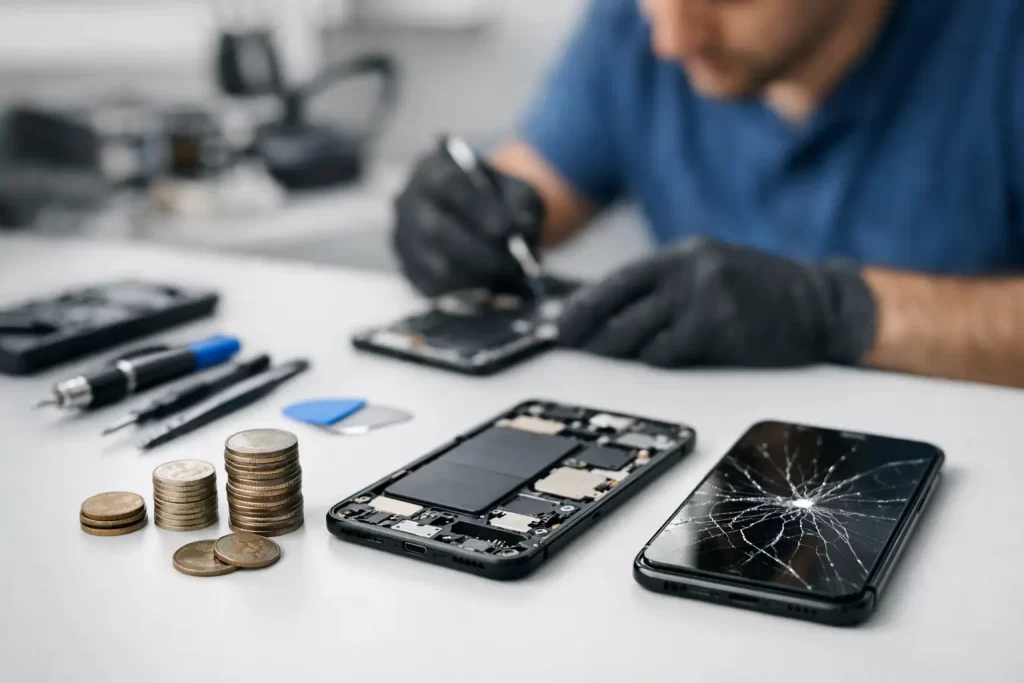
A cracked screen can look like a simple job until one quote comes in at $129 and another lands well above that. That gap usually comes down to phone repair cost factors most people never see – the part itself, the way the phone is built, the fault behind the fault, and how much labour is needed to get the device working properly again.
If you rely on your phone for work, study, bookings, maps, banking, or just getting through the day, price matters. So does speed. But the cheapest repair is not always the lowest-cost outcome if poor-quality parts fail early, Face ID stops working, or a water-damaged board is left untreated. A good repair quote should reflect the real job, not just the most obvious symptom.
The main phone repair cost factors
The first and biggest factor is the model of the phone. Newer devices usually cost more to repair because the parts cost more, the design is more compact, and the risk during disassembly is higher. An entry-level Android and a recent iPhone are not priced the same because the screens, batteries, adhesives, and internal layouts are not the same.
Screen technology also changes the price quickly. LCD panels are generally cheaper than OLED displays, and premium OLED screens can add a fair amount to the total. On some devices, the glass and display are fused together, so you are replacing the whole assembly rather than one damaged layer. That means the part cost rises even if the visible damage looks minor.
Back glass is another example. Many people assume it is a cosmetic fix, but on modern phones it can be labour-heavy. Some back glass repairs need specialised tools, controlled heat, careful adhesive removal, and extra time to avoid damaging wireless charging components, cameras, or frame edges. The part itself may not be the expensive part – the time and precision often are.
Then there is the difference between a straightforward parts swap and a fault that needs proper diagnosis. A battery replacement on a healthy device is usually predictable. A phone that will not charge could be a charge port, a battery issue, corrosion, board damage, debris in the port, or a failed charging circuit. Diagnostic time affects the quote because the technician is solving a problem, not just fitting a part.
Parts quality changes the price and the result
Not all replacement parts are equal. This is one of the biggest reasons quotes vary.
Lower-cost aftermarket parts can reduce the upfront price, but they can also mean dimmer screens, weaker touch response, reduced battery life, or poor fitment. In some cases, customers save a little on day one and end up paying more when the device comes back with a new issue a few weeks later. That is not value.
Higher-quality parts cost more, but they usually deliver a better finish and more reliable performance. For many people, especially if the phone is used every day for work or business, paying slightly more for a repair that holds up is the smarter call.
Warranty matters here too. A clear parts warranty adds confidence because it shows the repairer is willing to stand behind the work. That does not always make a quote the cheapest, but it does make it more accountable.
Why original features matter
Some repairs need extra care to preserve features like Face ID, fingerprint sensors, True Tone, front sensor assemblies, or camera calibration. On certain models, damaging one small flex cable can turn a standard screen repair into a much more expensive problem.
That is why experienced handling matters. A proper repair is not just about putting a new part in place. It is about keeping the whole phone functioning as it should.
Labour is not just time on the tools
People often compare repair prices as if the only difference is the part. In reality, labour includes skill level, diagnostic ability, equipment, testing, and risk.
A quick battery swap and a motherboard-level repair are worlds apart. Micro-soldering, charge-line tracing, audio IC work, backlight faults, boot loop issues, and liquid-damage board repair require specialised tools and experience. Those jobs are priced differently because they are different jobs.
Even on standard repairs, labour can increase if the device has already been worked on before. Stripped screws, missing brackets, damaged connectors, excess glue, or pry damage can all add time. A phone that has been opened badly by someone else is rarely a routine repair.
Same-day service can affect cost
Urgency can play a role as well. If you need a repair done fast because you are travelling, working shifts, running a business, or passing through Darwin CBD, the convenience of same-day turnaround has value. Fast service depends on stocked parts, efficient workflow, and technicians who can diagnose and complete repairs without dragging the job out for days.
That does not mean speed should cost a premium every time. It does mean a professional repair business that can fix many devices in under an hour has already invested in systems, tools, and stock to make that possible.
Hidden damage is where quotes can change
A cracked screen is obvious. Internal damage is not.
If a phone has been dropped hard enough to crack the display, it may also have frame damage, bent housing, loose battery adhesive, camera misalignment, or board stress. Water damage is even less predictable. A phone may seem fine after drying out, then fail later because corrosion continues inside the device.
This is why some quotes start as an estimate and get confirmed after inspection. That is not a sales trick when handled properly. It is the repairer being honest about what can and cannot be seen before the phone is opened.
Water damage is rarely a one-part fix
Liquid exposure changes the pricing conversation completely. Sometimes the fix is relatively minor. Sometimes it needs a full strip-down, ultrasonic cleaning, board-level diagnostics, replacement of affected parts, and data recovery work if the phone will not boot.
The important point is this: with water damage, you are often paying for diagnosis, stabilisation, and recovery as much as for replacement parts. The goal may be full repair, or it may be getting critical data off the device first. Those are different outcomes with different costs.
Brand and model make a real difference
Apple, Samsung, Google, Oppo and other brands all build phones differently. Even within one brand, repair complexity can swing from model to model.
Some phones are repair-friendly. Others use stronger adhesives, layered assemblies, or tightly packed internals that raise labour time. Foldable devices are another category again because the screens, hinges, and flexible components are more specialised and more expensive.
Availability matters too. If a part is common and easy to source, the price is usually more competitive. If the device is older, uncommon, or newly released, parts may cost more or take longer to get. That affects the final figure.
What a fair quote should include
A fair repair quote should be clear about what you are getting. That means the diagnosed fault, the parts being used, whether testing is included, and whether the work is covered by warranty. If the job has variables, such as possible board damage or unknown liquid exposure, that should be explained upfront rather than buried later.
Cheap quotes without detail can be risky. If a shop cannot clearly explain why a repair costs what it costs, that is usually not a great sign. Good repairers do not need to hide behind vague pricing.
For Darwin locals, convenience also has a value that should not be ignored. If your phone is your wallet, booking system, contact list, and work tool, losing half a day or more chasing a repair is a real cost. Fast turnaround, a local shopfront, and even a come-to-you option can make a higher quote more sensible if it gets you back online quickly.
How to keep your repair bill down
The easiest way to control cost is to act early. Replace a weak battery before it swells. Fix a cracked screen before moisture gets in. Clean out a charge port before repeated forcing damages the connector. Small faults often become expensive faults when left too long.
It also helps to describe the issue properly when booking. Mention whether the phone was dropped, got wet, stopped charging intermittently, restarted on its own, or had a previous repair. Good information helps the technician prepare the likely parts and tools, which can save time and sometimes money.
If you are comparing quotes, compare like for like. Ask what part quality is being used, whether the phone will be tested fully, and what warranty is included. A lower price only makes sense if the repair still does the job properly.
At iSmashed, that practical approach matters because customers usually want the same thing: a clear answer, a fair price, and their device back fast. No guessing. No inflated repair talk. Just the right fix for the actual fault.
When your phone breaks, the real question is not just what the repair costs. It is what is driving that cost – and whether the repair gets you back to normal without another problem a week later.