
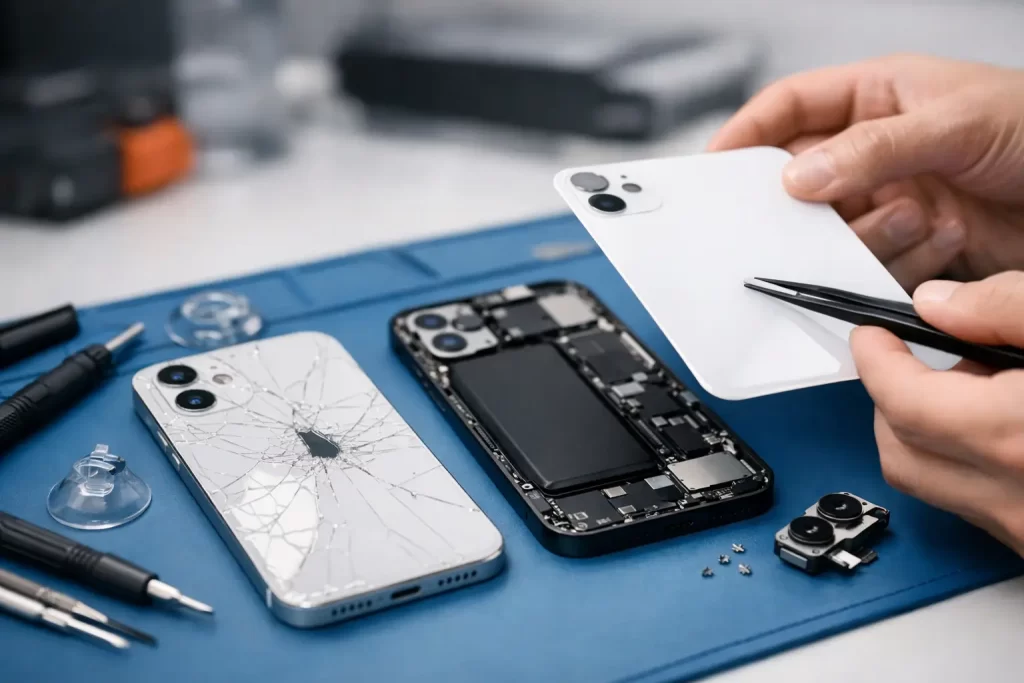
A cracked rear panel usually starts as a cosmetic problem. Then it catches on your pocket, sheds tiny glass flakes onto your hand, and makes a premium phone feel rough every time you pick it up. If you are weighing up iphone back glass replacement, the real question is not just whether the damage looks bad. It is whether leaving it alone will cost you more in comfort, resale value, and future repair risk.
For most people, a broken back glass is worth fixing sooner rather than later. It affects how the phone feels, can expose the housing to more damage over time, and often gets worse from ordinary use. If you rely on your iPhone for work, study, maps, banking, messages, and everything else that keeps the day moving, putting up with broken glass is rarely a good long-term plan.
When iPhone back glass replacement makes sense
Sometimes the damage is obvious – spiderweb cracks across the whole rear panel, missing chunks, or loose shards around the camera housing. Other times it is a single corner crack that seems harmless. The problem is that back glass damage rarely stays the same. Pressure from a case, heat from charging, and normal knocks in the car, at the gym, or on site can spread it fast.
Replacement usually makes sense when the glass is sharp, cracked near the camera lenses, lifting away from the frame, or making wireless charging unreliable. It also makes sense if you want to maintain resale value. Buyers notice rear damage immediately, and even minor cracks can drag the value down more than people expect.
There is also the practical side. Once the rear panel is compromised, dirt and moisture have an easier path into gaps around the housing. That does not guarantee internal damage, but it increases risk. On newer iPhones packed with delicate flex cables, charging components, and camera modules, small external damage can become a more expensive problem if ignored for too long.
Why this repair is not just a simple glass swap
Back glass replacement sounds straightforward until you see how modern iPhones are built. On many models, the rear glass is strongly bonded to the chassis. Removing it cleanly takes the right equipment, controlled heat, careful separation, and attention around the camera area, charging coil, flash, and frame edges.
That is why the cheapest option is not always the best option. Poor-quality work can leave rough frame edges, weak adhesive, damaged internals, or a finish that looks off straight away. In worse cases, an inexperienced repair can create fresh faults – wireless charging failure, camera focus issues, flash problems, or pressure damage inside the housing.
A proper repair is about more than getting broken glass off. It is about restoring the rear housing neatly, checking nearby components, and making sure the phone goes back together without introducing a second issue.
How iphone back glass replacement is usually done
The method depends on the iPhone model and the condition of the frame. On many devices, the damaged glass is removed from the rear housing using specialist tools and controlled heating. The remaining adhesive and debris are cleaned away, the frame is inspected, and a replacement panel is fitted accurately so it sits flush.
If the damage is severe, the repair can become more involved. A hard impact that shatters the back often does more than crack glass. It can bend the housing, damage the camera surround, affect charging alignment, or create internal stress points. In that case, a technician may need to assess whether a housing-based repair still makes sense or whether a broader rebuild is the better option.
This is where experience matters. A shop that handles both routine repairs and board-level faults is better placed to spot the issues that basic repairers miss. If a drop has caused more than cosmetic damage, you want that identified before the phone goes back into daily use.
Cost, turnaround, and what affects both
Customers usually want three answers straight away – how much, how long, and is it worth it. Fair questions. The honest answer is that it depends on the model, the severity of the break, and whether there is hidden damage around the frame or camera section.
Newer iPhone models with larger camera modules and more complex rear assemblies tend to cost more than older devices. If the frame is bent or previous repair work has made the housing harder to restore, labour can increase too. So can the need for extra parts if the camera lens, wireless charging layer, or flash area has been affected.
Turnaround also varies. Some back glass repairs can be completed quickly when the job is clean and straightforward. Others take longer because the glass has shattered into hundreds of fragments or because the phone needs additional checks after impact. Fast service matters, but rushing this kind of repair is how corners get cut.
That said, if you are in Darwin and need the phone back without a long manufacturer delay, local repair is often the practical option. A service-led repair shop should be able to tell you what is realistic, what the price covers, and whether the job is purely cosmetic or part of a bigger fault pattern.
Can you keep using the phone with cracked back glass?
You can, but that does not mean you should for long. A case might cover the damage, but it does not remove the risks. Cracks spread. Loose shards break away. Dust and moisture find their way in more easily. If the impact was heavy enough, the rear damage may be the visible part of a bigger issue.
There is also the user experience. People put up with cracked rear glass because the screen still works, but they tend to regret waiting once the damage worsens. A phone used constantly through the day should feel safe and solid in hand, not like something you have to handle carefully around the edges.
If it is a work phone, the decision is even easier. Downtime costs more than the repair when your device is tied to calls, bookings, banking apps, delivery updates, staff contact, or travel plans.
Choosing the right repairer for iPhone back glass replacement
Not every repair business is set up for this job properly. A good repairer should be clear about turnaround, pricing, warranty, and what happens if the device shows signs of additional damage once opened or inspected. You want practical answers, not vague promises.
Look for a service that handles more than just screen swaps. Back glass replacement sits in that middle ground where cosmetic repair can overlap with frame issues, charging faults, camera concerns, or motherboard stress after a drop. A technician with experience in micro-soldering, logic board diagnostics, and impact-related faults is more likely to catch those problems early.
It also helps to choose a shop that respects urgency. Most customers are not researching this repair for fun. They need the phone fixed quickly, at a fair price, and without hassle. That is exactly why businesses such as iSmashed focus on fast, affordable, professional repairs with clear warranty support.
What to expect after the repair
Once the new rear glass is fitted, the phone should feel solid again and look significantly cleaner. The sharp edges and flaking glass are gone, handling improves, and the device is easier to sell or trade later if that matters to you.
You should also expect the repairer to confirm that key functions are behaving as they should, especially if the phone suffered a strong impact. Depending on the model and the damage, that may include checks around charging, cameras, buttons, housing fit, and general operation.
No repair is helped by poor aftercare. Use a decent case, avoid cheap charging gear, and do not ignore any post-drop symptoms just because the phone powers on. If face recognition, charging, camera focus, or signal starts acting strangely after a fall, that points to a deeper issue and should be checked promptly.
Repair or replace?
Sometimes replacement is the smarter financial decision, especially if the phone already has multiple faults such as battery wear, screen damage, charging problems, or water exposure. But if the iPhone is otherwise working well, back glass replacement is usually the more cost-effective move.
A good rule is simple. If the phone still meets your needs, holds charge reasonably, and has no major board-level issue, repairing the rear glass can buy you plenty more usable life without the cost of a new handset. If the damage came with other symptoms, you need a proper assessment before spending money either way.
Cracked back glass does not look urgent in the way a dead screen does, but it has a habit of becoming the repair people wish they had booked earlier. The sooner it is checked, the easier it usually is to put right and get your phone back to feeling like your phone again.